


 2026-08-19
The European home furnishing market is experiencing sustained growth, presenting a structural window of opportunity for Chinese upholstered furniture exports. According to General Administration of Customs data, in the first three quarters of 2025, China's furniture exports to Europe reached US$12.368 billion, accounting for 24.7% of total exports. The Netherlands, as Europe's gateway market, has performed particularly strongly – from January to September 2025, China's furniture exports to the Netherlands totaled approximately RMB 9.16 billion, up 6.15% year‑on‑year. The Netherlands' annual furniture consumption exceeds €12 billion, with imports accounting for as much as 78%. Meanwhile, the EU sofa market is steadily expanding at an annual growth rate of 1.5%–2.5%, with fabric sofas representing approximately 60%–65% of unit sales. As Europe's largest port, Rotterdam, with its efficient logistics capabilities and strategic location at the heart of the Benelux economic zone, is emerging as a critical gateway for Chinese upholstered furniture companies expanding into the European market.
However, behind the opportunity lies a formidable logistics challenge.
Fabric sofas, mattresses, and other upholstered furniture products are classic light‑and‑bulky cargo – large in volume but light in weight. Sea freight charges are calculated based on volumetric weight, and traditional loading methods result in extremely low space utilization, leading to significant waste in logistics costs. Industry estimates show that freight costs for light‑and‑bulky cargo have risen considerably year‑on‑year, with a substantial portion of corporate profits eroded by shipping expenses. Compounding the issue, upholstered furniture is highly sensitive to transport conditions – long‑haul sea voyages experience significant temperature and humidity fluctuations, making fabric prone to moisture and mold, while sponge structures are susceptible to deformation under compression. Any inadequate protection could result in the loss of entire shipments. Furthermore, the EU's import compliance requirements for upholstered furniture are becoming increasingly stringent. Fabric sofas, mattresses, and similar products must meet mandatory access standards including EN 1021 flammability standards and CE certification, with material safety test reports and flame‑retardant performance data being indispensable.
Exporting upholstered furniture is far more complex than simply "loading it into a container." Leveraging its years of professional expertise in international logistics and a well‑established European local logistics network, AMASS has developed a specialized and refined logistics solution for upholstered furniture products – including fabric sofas and mattresses – shipped from Qingdao Port to Rotterdam Port, the Netherlands. This solution integrates packaging optimization, moisture protection, and full‑chain coordination into a three‑in‑one service system, enabling cost reduction, quality assurance, and efficiency enhancement for furniture exports.
PART 01 – Optimized Packaging and Container Loading to Minimize Volumetric Costs from the Source
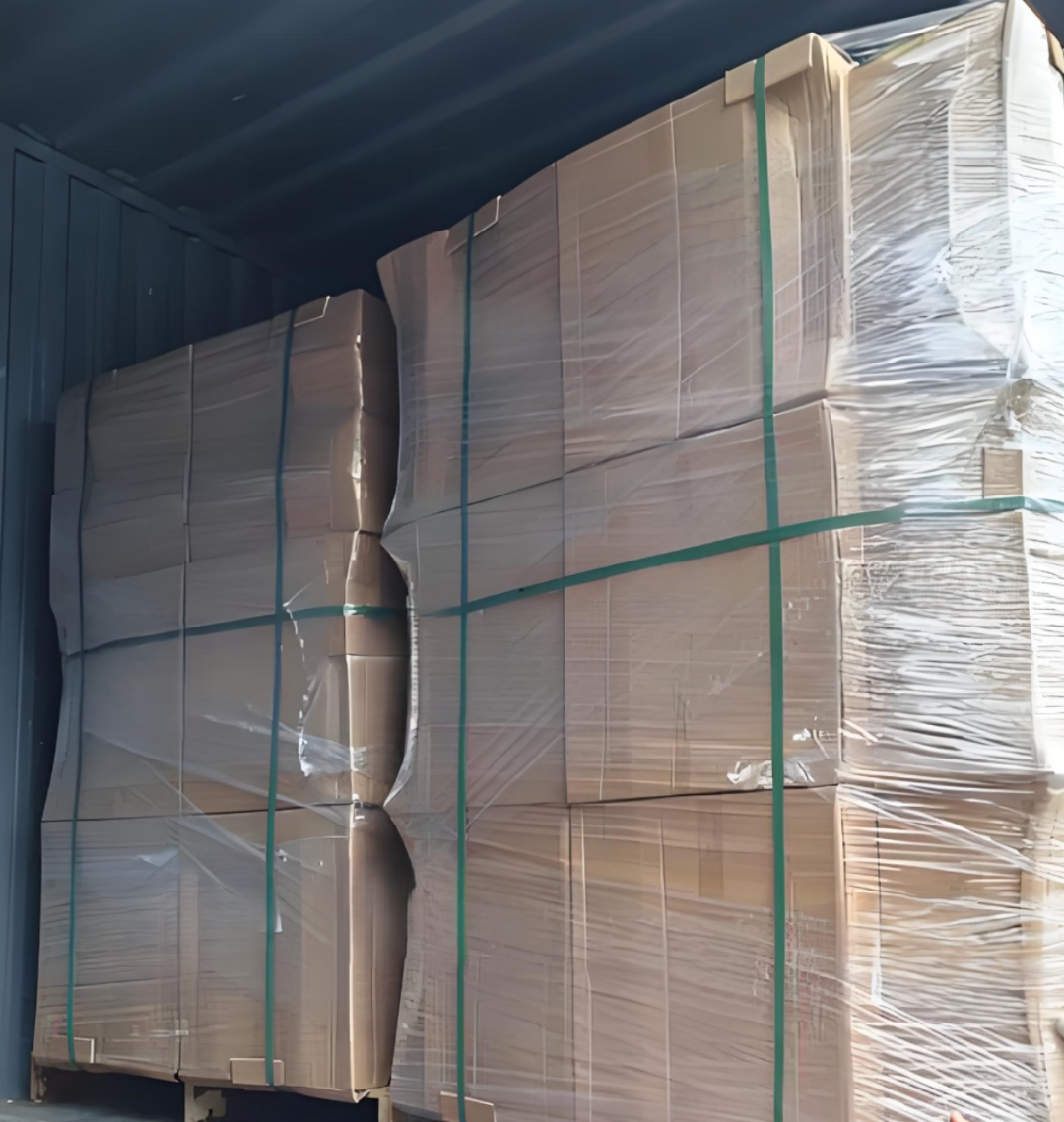
The key to reducing costs for light‑and‑bulky cargo lies in "compressing non‑essential volume and optimizing the billing method." The AMASS team works closely with factories upfront to optimize product packaging solutions. For the fluffy nature of fabric sofas and mattresses, we apply vacuum compression technology to reasonably reduce cargo volume – after compression, textile and upholstered products can see volume reductions of 30% to 60%. Simultaneously, we scientifically plan the mixed loading of high‑ and low‑profile cargo based on the internal space structure of containers, following the loading principle of "heavy items at the bottom, light items on top; large items at the bottom, small items as fillers." Heavy cargo is placed at the bottom to provide stability, while light‑and‑bulky cargo fills the upper space. Through precise calculation and spatial arrangement, we maximize container utilization, increasing single‑container loading capacity by 10% to 20% – directly reducing logistics costs for our clients from the very beginning.
PART 02 – Comprehensive Moisture Protection to Safeguard Cargo Quality Throughout the Journey
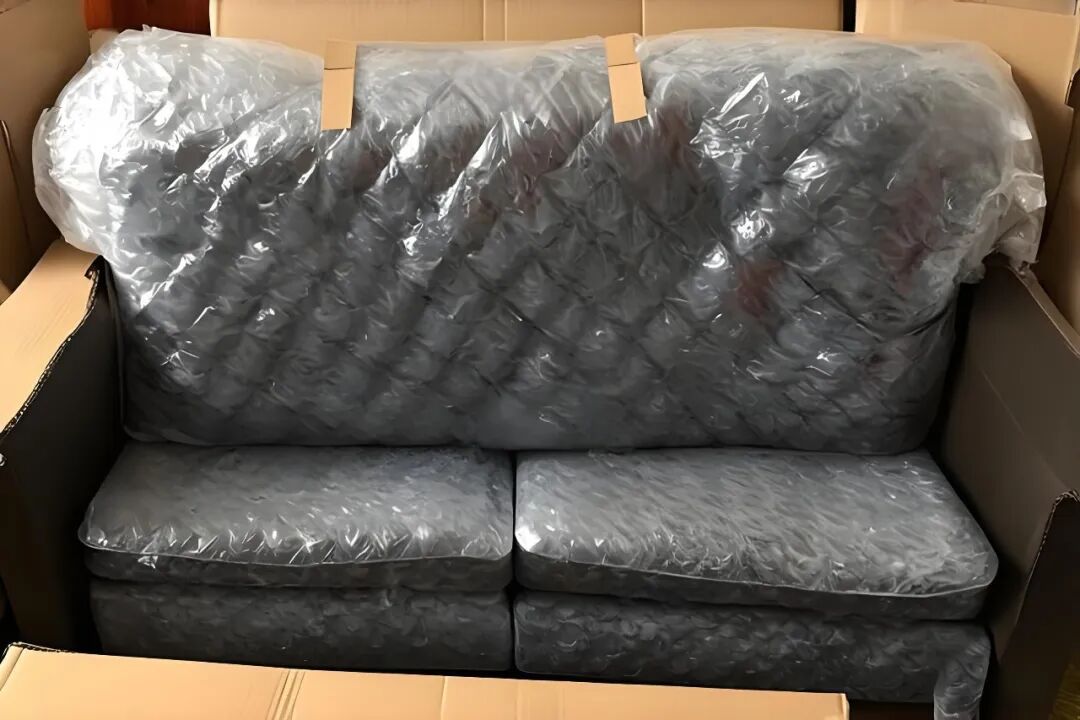
Long‑haul sea transport involves significant temperature differences and high humidity – moisture damage to fabric and mold growth, as well as sponge degradation due to condensation, are the most common cargo loss risks in upholstered furniture exports. AMASS employs multiple moisture‑protection measures, including full coverage with waterproof stretch film and the strategic placement of desiccants inside containers, to fundamentally prevent moisture contamination. Every piece of upholstered furniture is professionally waterproof‑wrapped before loading, and desiccants are scientifically distributed within the container to effectively absorb condensation moisture. This dual‑layer moisture barrier ensures that fabric sofas and mattresses remain dry and pristine throughout the 30‑day voyage, arriving at Rotterdam Port in like‑new condition.
PART 03 – Full‑Chain Resource Coordination and Seamless European Local Connectivity
The journey for upholstered furniture exports does not end at Rotterdam Port. AMASS leverages its well‑established European local logistics network to provide one‑stop destination services including customs clearance, de‑vanning and sorting, and last‑mile delivery. Our professional team strictly adheres to EU compliance requirements including CE certification and EN 1021 flammability standards, pre‑auditing product qualifications and standardizing documentation to ensure efficient customs clearance and compliant entry. Upon arrival in Rotterdam, our localized sorting and distribution system delivers fabric sofas and mattresses precisely to end customers. This shipment successfully reduced both cargo damage rates and total logistics costs, establishing a replicable logistics model for upholstered furniture exports to Europe.
 2026-08-19
The European home furnishing market is experiencing sustained growth, presenting a structural window of opportunity for Chinese upholstered furniture exports. According to General Administration of Customs data, in the first three quarters of 2025, China's furniture exports to Europe reached US$12.368 billion, accounting for 24.7% of total exports. The Netherlands, as Europe's gateway market, has performed particularly strongly – from January to September 2025, China's furniture exports to the Netherlands totaled approximately RMB 9.16 billion, up 6.15% year‑on‑year. The Netherlands' annual furniture consumption exceeds €12 billion, with imports accounting for as much as 78%. Meanwhile, the EU sofa market is steadily expanding at an annual growth rate of 1.5%–2.5%, with fabric sofas representing approximately 60%–65% of unit sales. As Europe's largest port, Rotterdam, with its efficient logistics capabilities and strategic location at the heart of the Benelux economic zone, is emerging as a critical gateway for Chinese upholstered furniture companies expanding into the European market.
However, behind the opportunity lies a formidable logistics challenge.
Fabric sofas, mattresses, and other upholstered furniture products are classic light‑and‑bulky cargo – large in volume but light in weight. Sea freight charges are calculated based on volumetric weight, and traditional loading methods result in extremely low space utilization, leading to significant waste in logistics costs. Industry estimates show that freight costs for light‑and‑bulky cargo have risen considerably year‑on‑year, with a substantial portion of corporate profits eroded by shipping expenses. Compounding the issue, upholstered furniture is highly sensitive to transport conditions – long‑haul sea voyages experience significant temperature and humidity fluctuations, making fabric prone to moisture and mold, while sponge structures are susceptible to deformation under compression. Any inadequate protection could result in the loss of entire shipments. Furthermore, the EU's import compliance requirements for upholstered furniture are becoming increasingly stringent. Fabric sofas, mattresses, and similar products must meet mandatory access standards including EN 1021 flammability standards and CE certification, with material safety test reports and flame‑retardant performance data being indispensable.
Exporting upholstered furniture is far more complex than simply "loading it into a container." Leveraging its years of professional expertise in international logistics and a well‑established European local logistics network, AMASS has developed a specialized and refined logistics solution for upholstered furniture products – including fabric sofas and mattresses – shipped from Qingdao Port to Rotterdam Port, the Netherlands. This solution integrates packaging optimization, moisture protection, and full‑chain coordination into a three‑in‑one service system, enabling cost reduction, quality assurance, and efficiency enhancement for furniture exports.
PART 01 – Optimized Packaging and Container Loading to Minimize Volumetric Costs from the Source
The key to reducing costs for light‑and‑bulky cargo lies in "compressing non‑essential volume and optimizing the billing method." The AMASS team works closely with factories upfront to optimize product packaging solutions. For the fluffy nature of fabric sofas and mattresses, we apply vacuum compression technology to reasonably reduce cargo volume – after compression, textile and upholstered products can see volume reductions of 30% to 60%. Simultaneously, we scientifically plan the mixed loading of high‑ and low‑profile cargo based on the internal space structure of containers, following the loading principle of "heavy items at the bottom, light items on top; large items at the bottom, small items as fillers." Heavy cargo is placed at the bottom to provide stability, while light‑and‑bulky cargo fills the upper space. Through precise calculation and spatial arrangement, we maximize container utilization, increasing single‑container loading capacity by 10% to 20% – directly reducing logistics costs for our clients from the very beginning.
PART 02 – Comprehensive Moisture Protection to Safeguard Cargo Quality Throughout the Journey
Long‑haul sea transport involves significant temperature differences and high humidity – moisture damage to fabric and mold growth, as well as sponge degradation due to condensation, are the most common cargo loss risks in upholstered furniture exports. AMASS employs multiple moisture‑protection measures, including full coverage with waterproof stretch film and the strategic placement of desiccants inside containers, to fundamentally prevent moisture contamination. Every piece of upholstered furniture is professionally waterproof‑wrapped before loading, and desiccants are scientifically distributed within the container to effectively absorb condensation moisture. This dual‑layer moisture barrier ensures that fabric sofas and mattresses remain dry and pristine throughout the 30‑day voyage, arriving at Rotterdam Port in like‑new condition.
PART 03 – Full‑Chain Resource Coordination and Seamless European Local Connectivity
The journey for upholstered furniture exports does not end at Rotterdam Port. AMASS leverages its well‑established European local logistics network to provide one‑stop destination services including customs clearance, de‑vanning and sorting, and last‑mile delivery. Our professional team strictly adheres to EU compliance requirements including CE certification and EN 1021 flammability standards, pre‑auditing product qualifications and standardizing documentation to ensure efficient customs clearance and compliant entry. Upon arrival in Rotterdam, our localized sorting and distribution system delivers fabric sofas and mattresses precisely to end customers. This shipment successfully reduced both cargo damage rates and total logistics costs, establishing a replicable logistics model for upholstered furniture exports to Europe.

